Uncle Sam’s Scan Vault: Turning Public-Domain Government Models Into Portfolio Pieces
Most 3D artists have heard the pitch: the US government has a mountain of free scans, and you can use them for almost anything. That is true, but it is also the kind of half-truth that gets people into trouble. The good news is that federal collections really do hold incredible material — fossils, spacecraft hardware, historic buildings, topographic landscapes, even everyday objects from museum archives. The less good news is that raw government scans often arrive with weird scale, messy topology, missing textures, and licensing notes that need a careful read.
If you treat those collections as a source of raw material rather than finished assets, they become a serious advantage. You can build environment pieces, portfolio props, and client-ready hero objects without paying license fees. You just need a pipeline that respects the archive and a presentation strategy that makes the work yours.
Why Government Scans Are Worth Your Time
A lot of marketplace assets look the same. Another sci-fi crate. Another stylized rock. Public-domain scans give you shapes that feel specific and lived-in: a Apollo-era pressure suit, a limestone fossil, a national park trail marker, a library reading room chair. Specificity is a portfolio superpower. It tells clients you can find unusual references and turn them into production-ready models.
The financial angle matters too. US-based freelancers and small studios are always looking for ways to keep project costs down without handing over ownership. Public-domain assets can soften the cost of background props and environment dressing. That said, free does not mean careless. You still need to verify the license, document the source, and do the cleanup work.
Where the Good Stuff Lives
The Smithsonian Open Access collection is the first stop for many artists. It includes millions of images and 3D models released under Creative Commons Zero, which is about as permissive as it gets. NASA’s 3D Resources page is another favorite, especially for spacecraft, rovers, and planetary geology. The National Park Service publishes cultural and natural history material, and the Library of Congress has digitized objects and structures that can be useful for period pieces.
Do not assume every item in a government collection is automatically public domain. Federal works are often free of copyright in the US, but collections include contractor work, donated objects, trademarks, cultural materials, and items with privacy or location restrictions. A scan of a historic building may be fine; the building’s name or logo may not be. A museum object may be public domain; the museum’s photography policy may still apply to how you use its website assets.
Read the item-level rights statement. Look for CC0, public domain, or “no known copyright restrictions.” When attribution is not legally required, add it anyway. A simple source ledger with the institution, item title, URL, license, and download date will save you later.
The Cleanup Gauntlet
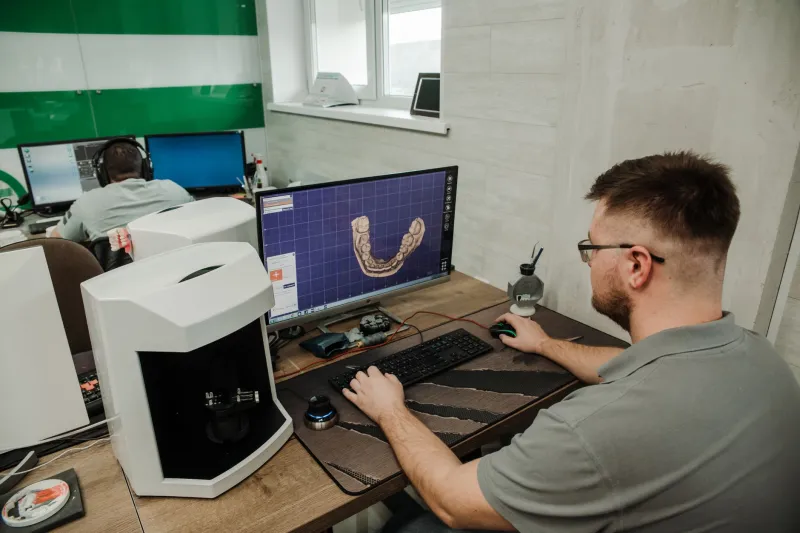
Raw scans are not game-ready. They are capture data. The first step is inspection: open the file, check units, confirm orientation, and look for holes, floating geometry, and baked-in lighting. Photogrammetry scans often carry shadows and color information that look wrong once you relight the scene.
Next comes scale. Government scans may be in meters, millimeters, or something stranger. Compare the model to a known reference and set a real-world scale early. If you skip this, every later decision about bevels, texture density, and collision will be off.
Then decide whether you need the scan as-is or a retopologized version. For portfolio turntables, a cleaned-up decimated mesh with baked normals can be enough. For game or real-time work, build a lower-poly version, unwrap it, and bake ambient occlusion, normal, and curvature maps from the high-resolution scan. Keep the original scan in an archive folder and work from a copy.
Materials deserve their own pass. Convert captured color into a PBR-friendly setup: base color, roughness, normal, and ambient occlusion. Remove baked lighting where possible. If the scan includes a plinth or background, mask it out. Clean the texture seams before you fall in love with the silhouette.
Remix Without Erasing the Story
The strongest portfolio pieces do not just show a cleaned scan. They show a point of view. Put the object in a context that makes sense: a fossil in a natural history diorama, a NASA part in a clean-room display, a park sign in a weathered trailhead scene. Add wear, dust, and story-specific detail, but do not invent damage that contradicts the source.
Be careful with cultural and sensitive objects. Some collections include Indigenous cultural items, human remains, or protected archaeological locations. Public-domain status does not automatically make every use appropriate. When in doubt, choose a different object or contact the institution.
Make the Process Visible
Clients and art directors love seeing how you think. A before-and-after breakdown is more persuasive than a polished hero render alone. Show the raw scan, the cleanup pass, the retopo and bake stage, and the final presentation. Include the source link and a short note about the license. That transparency builds trust and proves you are not just downloading assets and calling them original work.
As of 2026, the competition for attention is fierce. A government scan will not make your portfolio stand out by itself. What stands out is a clean pipeline, a clear license trail, and a final asset that feels intentional. Uncle Sam provides the raw material. You provide the craft.