Brick, Glass, and Neon: Capturing Main Street Before the Scaffolding Goes Up
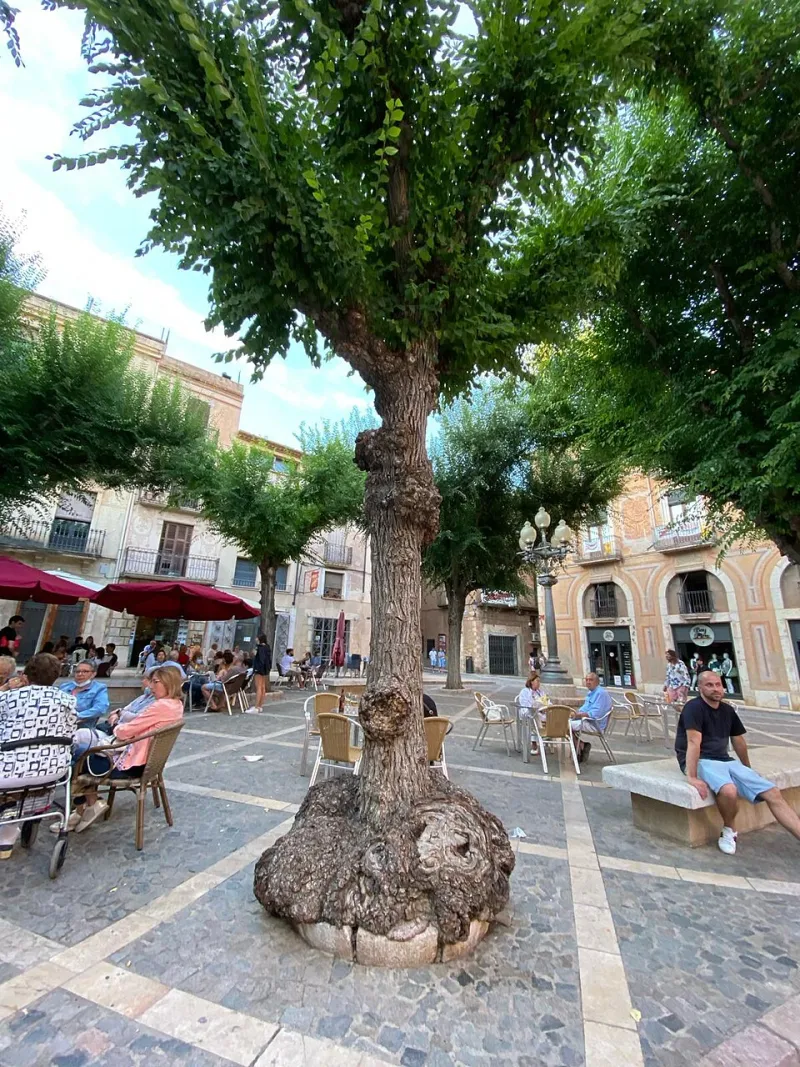
Photo: Galimatiasgg, CC0, via Wikimedia Commons
There's a building on a corner in nearly every American town that everyone drives past and nobody photographs. A 1920s brick pharmacy with a hand-painted sign. A mid-century diner with a neon arrow that quit working sometime in the 1980s. Then a renovation crew shows up, the sign goes into a dumpster, and the only surviving record is a blurry phone shot someone posted a decade ago.
That gap is where photogrammetry earns its keep. A clean scan of a main-street facade does two jobs at once: it hands the local historical society something they can actually use, and it gives you a portfolio piece with more storytelling weight than another stylized sci-fi crate. It also happens to be one of the cheapest ways to practice hard-surface capture under real-world conditions.
Below is the field guide I wish someone had handed me before my first attempt, which produced a lovely model of a brick wall and a gigantic smear where a Honda Civic had been parked.
Start With Permission, Not With Your Camera
In the US, photographing a building from a public sidewalk or street is generally fair game. Blocking that sidewalk with a tripod for ninety minutes is not, and in a historic district you may run into local ordinances, business improvement district rules, or a very reasonable shop owner who just wants to know why a stranger is circling her storefront.
Make three contacts before you leave the house: the property owner, the town or city clerk, and whoever runs the local historical society or main street program. The historical society is the secret weapon here — they often already have archival photos, know which buildings are slated for demolition, and will happily write you a letter that makes every other conversation easier.
Get the permission in writing, even if it's an email. Note the dates, the hours, and whether you can use ladders or a monopod on private property.
Pick Your Window: Light, Cars, and the Saturday Market Problem
Overcast days are your friend. Flat lighting means no baking shadows into albedo, and it means glass behaves slightly less like a funhouse mirror. If you're stuck with sun, work the two hours after sunrise or the two hours before sunset and shoot fast, because a facade that moves from shade to direct sun mid-capture will give you a model with a visible seam down the middle.
Then there's the car problem. Parked vehicles are the number one killer of main-street scans. They occlude doors, cast weird shadows, and if one drives off mid-pass, your software will render a ghost car fused into the sidewalk. Scout for a Sunday morning or a weekday before 8 a.m. If the street is never empty, plan your passes around the gaps and accept that you'll be patching storefronts in post.
Farmers markets, parades, and street fairs are non-starters. So are garbage trucks. Check the municipal collection schedule — this sounds absurd until the compactor rolls through your capture loop.
The Capture Loop: Overlap, Elevation, and Never Trust a Single Pass
Shoot with a fixed focal length, manual exposure, manual focus, and an aperture around f/8 to f/11 so the whole facade stays sharp. Lock your ISO and white balance, and resist the urge to refocus between frames — focus breathing will shift your camera position estimate.
Then do the boring thing:
- Three passes minimum. One at eye level, one from chest height, one from overhead with a monopod. Elevation variety is what keeps upper cornices and window sills from turning into mush.
- Seventy to eighty percent overlap. If you think you have enough, shoot ten more frames.
- Loop, don't sweep. Come back along the same path at a different height rather than marching down the street once and calling it done.
- Include a scale reference. A tape measure in frame, a known brick course, or a printed scale bar taped to a doorway. Clients ask for real dimensions more often than you'd expect.
- Shoot the detail shots. Door handles, transom windows, sign brackets. They cost you two minutes and save you an hour of texture patching.
Glass, Neon, Brick: The Three Problem Materials
Glass is the classic heartbreak. Storefront windows reflect everything: sky, street, the photographer. Reduce it by shooting on overcast days, polarizing where you can, and capturing interiors separately with the owner's permission so you can composite reflections out and see something behind the pane. Expect to rebuild mullions and frames by hand for anything that reads as a mirror.
Neon won't survive as a photograph. Shoot the sign twice — once with the tubes off, once with them on — and treat the glow as an emissive material in your shader. That way the asset reads correctly in both daylight and a night-time render, and you're not stuck with a texture that looks like a blown-out orange smear.
Brick is deceptive. The repetitive pattern is easy for software to align but hard for it to get right — whole courses will slide a half-brick sideways if you have too few views. Get close, get angles, and shoot the corners where brick meets trim. Corners anchor everything.
Street Furniture Is Not Clutter (Until It Is)
Hydrants, benches, bike racks, and sandwich boards are all part of a main street's character, and they're all alignment hazards. Anything movable will ghost. Anything bolted down will scan fine but make your cleanup pass miserable.
Pick a policy before you shoot. Either embrace the furniture — scan it properly with dedicated close passes so it's a clean part of the asset — or plan to mask it out in processing and rebuild the sidewalk underneath. What you should never do is split the difference and hope.
From Point Cloud to Portfolio Piece
Run your alignment, then budget real time for cleanup. Decimate to a sensible density, retopologize the hero facade, bake normals and ambient occlusion, and rebuild signage as clean geometry with crisp, straight-on textures instead of whatever warped version the scan produced. If a sign carries a live trademark, either get written permission or replace the lettering with a generic stand-in for publishing.
Deliver in formats people can actually open: glTF for the web, USDZ for mobile review, OBJ or FBX for anyone doing print or archival work. Name files like an adult. Put the location, capture date, and capture method in the metadata.
Archive It Somewhere Public
A scan living only on your hard drive isn't preservation, it's hoarding. Offer a copy to the local historical society or main street program, upload a viewer-friendly version to a public platform, and write a short process post. Nine times out of ten, the town will share it, the local paper will mention it, and your next three freelance inquiries will come from people who saw it.
That's the pitch, really. You get a technically demanding asset, a story worth telling in an interview, and a small town that suddenly has a record of a storefront it might not have next year. Bring a charged battery and a tape measure.