The Small Stuff Pays: Why Dumpsters, Hydrants, and Parking Meters Belong in Your 3D Catalog
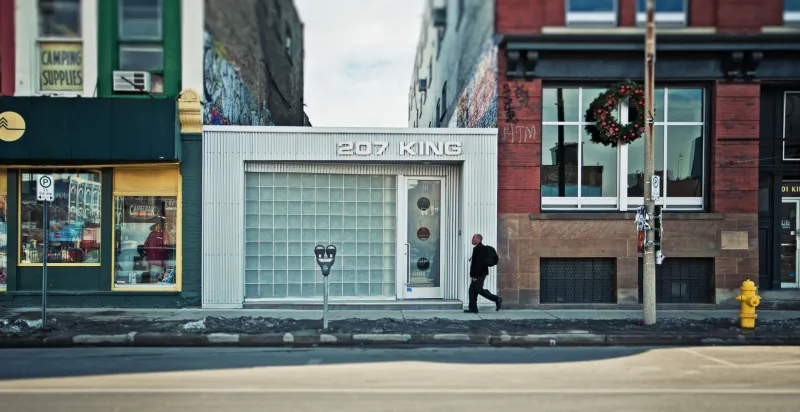
Every 3D artist wants to model the dragon. Or the hero car. Or the cyberpunk katana with seventeen moving parts and a glowing rune etched into the blade. Meanwhile, some studio in the Midwest is quietly hunting for a decent alley dumpster because the one in their scene looks like a gray shoebox with wheels.
That is the quiet money in boring props. Not glamorous, not portfolio-bait, but shockingly steady. US game studios need street clutter. Archviz firms need municipal furniture. Marketplace buyers need parking meters that do not look like they were built from three cylinders and a prayer. If you can model the small stuff well and package it cleanly, you can build a catalog that keeps earning while your hero piece sits in the portfolio waiting for its close-up.
The unglamorous demand is real
Background props are the connective tissue of believable scenes. A fire hydrant tells you the street is American. A parking meter tells you it is commercial. A dumpster tells you the alley is behind a restaurant, not a fantasy tavern. These objects do not need to be stars, but they do need to be right. When they are wrong, the whole frame feels off in a way viewers cannot always name.
The buyers are not mysterious. Game studios working on urban environments need modular street kits. Archviz firms doing multifamily developments need site furnishings that match US municipal standards. Indie developers need affordable packs that fill a block without eating the art budget. Marketplace buyers often search for the exact object they are missing, not a themed bundle called 'Urban Vibes Vol. 3.'
That means your research should start with specificity, not style. Search for what people actually ask for: 'Chicago alley dumpster,' 'US parking meter 3D model,' 'municipal fire hydrant pack,' 'strip mall exterior props.' Look at asset store reviews and forum requests. Check archviz job boards for phrases like 'site furniture' or 'street props.' Pay attention to the boring words in project briefs. They are clues.
Research regional demand like a local
US prop demand has regional flavor. A Boston hydrant is not a Phoenix hydrant. A Brooklyn loading alley has different clutter than a strip mall in Ohio. You do not need to become a municipal historian, but you do need enough reference to avoid generic mush.
Start with city photo archives, Google Street View, and local public works galleries. Look at paint colors, mounting heights, bolt patterns, and the little reflective plates that make a hydrant read as a real object. Save reference boards by region: Northeast, Midwest, South, West Coast. Build a simple spreadsheet with columns for object type, region, reference source, and common variants.
Then check demand signals. Search marketplace listings and note which prop types have thin coverage. Read negative reviews on existing assets. 'Too low-poly' is a signal. 'Wrong scale' is a signal. 'No clean UVs' is a signal. When buyers complain about the same flaw across multiple products, that is your opening.
Build once, pack forever
Boring props reward a repeatable workflow. You are not trying to make each dumpster a bespoke art piece. You are trying to make a system that turns reference into a clean, game-ready asset without reinventing the pipeline every time.
A practical loop looks like this: blockout from measured reference, model to real-world scale, keep a shared material library, UV with consistent texel density, bake normal detail from a high-poly source, and export in the formats buyers expect. Keep pivots clean. Name objects like an adult. 'Hydrant_US_Northeast_01' beats 'final_final_hydrant_ok.'
Packaging matters as much as modeling. A good prop pack includes a master scene, individual files, LODs where relevant, collision meshes for game buyers, and a one-page spec sheet with dimensions and texture resolutions. That spec sheet is not busywork. It is the difference between a buyer trusting your pack and a buyer scrolling past it.
If you sell on marketplaces, build thumbnails that show scale. Put the hydrant next to a human silhouette. Show the dumpster in a real alley context. Buyers are visual, but they are also tired. Make it easy to understand what they are getting in three seconds.
Price the catalog, not the object
Boring props should not be priced like hero assets, but they should not be dumped at $9 either. The goal is a catalog ladder. Individual props can be low-friction purchases. Small themed packs can sit at a mid-tier price. Regional bundles or studio-friendly collections can command more because they save research time.
Think in terms of replacement cost. If a studio would spend two days modeling, UVing, and testing a parking meter, a clean asset at a fair price is an easy yes. If your pack includes ten variants and a spec sheet, the value is not just geometry. It is the research and the packaging.
Avoid the race to the bottom by being specific. 'American Street Props Mega Pack' competes with everything. 'US Municipal Hydrants: Northeast and Midwest Variants' competes with almost nothing. Specificity gives buyers a reason to choose you that has nothing to do with being the cheapest.
A quick chat with a prop artist who pays rent with clutter
I asked Maya R., a freelance prop artist in Pittsburgh, why she stopped chasing hero assets and started building a boring-prop catalog.
'Honestly, hero pieces got me attention and background props got me repeat clients,' she said. 'A studio would buy a hydrant pack, then ask if I had trash cans. Then bollards. Then sidewalk grates. It turned into this quiet subscription business where people came back because I had the stuff nobody wanted to model.'
Her advice for new prop catalog builders? 'Do not guess. Look at what people complain about in reviews. Model the object they cannot find, not the one you think looks cool. And for the love of all things, include a scale reference. Half my sales come from people who just want to know the thing is the right size.'
The catalog mindset
Boring props are not a creative compromise. They are a product strategy. The artists who win this space treat dumpsters and hydrants like a catalog, not a one-off portfolio experiment. They research regional variants, build a repeatable pack workflow, price with intention, and keep adding the small objects that make big scenes believable.
So yes, model the dragon. But also model the parking meter. The dragon gets the likes. The parking meter gets the invoice.