Hands-On History: The Tactile 3D Model Commissions US Museums Are Quietly Funding
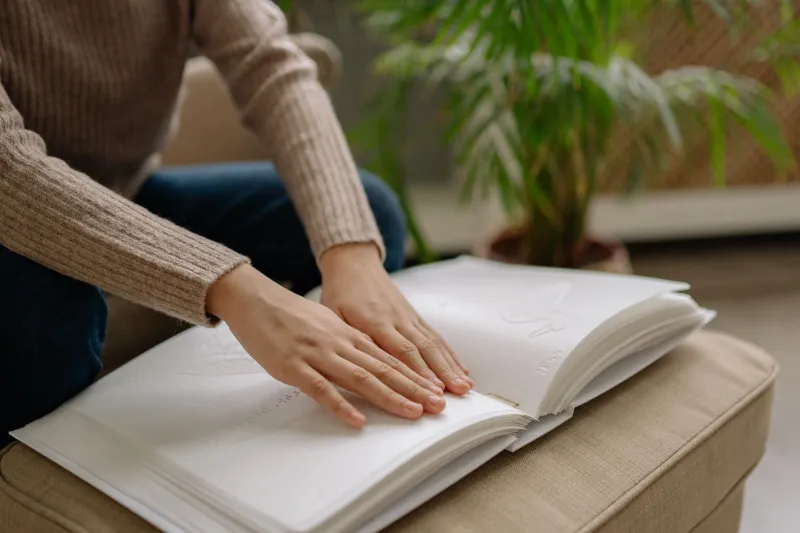
Walk into the right museum in 2026 and you will see a small sign that would have been unthinkable a generation ago: Please touch. Not a polite suggestion near a bronze sculpture, but an invitation attached to a 3D-printed model built for hands. These tactile pieces are part of accessibility tours, classroom visits, and low-vision programming, and they are turning into steady commission work for 3D artists who can handle more than a clean render.
At 3D Model Club, we have watched portfolio sites fill up with beautiful turntables of scanned artifacts. The museum niche asks a different question: can someone understand this object by holding it? That shift changes the modeling, the materials, and the client conversation.
What Museums Actually Mean by “Tactile”
A tactile model is not a miniature souvenir. It is a translation. Curators may start with a photogrammetry scan of a carved stone tablet or a fossil skull, but the final print often needs simplified geometry, exaggerated landmarks, and a shape that survives repeated handling by school groups.
“A tactile model is a translation, not a replica,” says Dana Whitfield, access programs coordinator at a mid-sized art museum in Ohio. “If a visitor cannot tell a horse from a dog by touch, the model is not finished, no matter how accurate the scan was.”
That means artists need to ask about reading order. Where does the hand land first? Is there a clear front, back, and top? Are fragile details like reins or antennae reinforced or removed? Museums care about beauty, but they care more about whether the object communicates.
The Commissioning Conversation
Museum accessibility budgets are not Silicon Valley budgets, but they are real. Funding often comes through grants from the Institute of Museum and Library Services, state arts councils, or internal inclusion initiatives tied to ADA commitments. A single project might include three to eight models for a touch tour, plus replacement parts and a maintenance guide.
Marcus Reyes, an exhibition designer at a natural history museum in Colorado, says the first meeting is usually about failure points. “We need to know how it fails,” he says. “Will the jaw snap off after a hundred kids? Can it be cleaned with museum-approved wipes? If a base cracks, can we reprint it without redoing the whole object?”
That is why smart artists price the revision loop, not just the first print. A museum commission is closer to product design than gallery art. Deliverables often include print-ready files, physical models, a care sheet, and a simple way for staff to order replacements.
Rules of the Road for Scale and Durability
There is no universal spec, but experienced makers converge on a few practical rules. Keep the smallest readable feature at roughly 2 mm or larger. Avoid sharp points and deep undercuts that trap fingers or cleaning cloths. Use rounded edges on bases. Weight the bottom so the model does not tip during a one-handed touch tour.
Material choice matters. PETG and tough PLA blends are common for repeated handling; resin prints can look sharp but may chip or crack if dropped. If a model will travel in a classroom kit, design it to survive a four-foot drop and a wipe-down with mild cleaner. Contrasting colors can help low-vision visitors, but texture does more work than color.
“We ask for a prototype before the full set,” Whitfield says. “A museum floor is a stress test. If the prototype feels confusing in the first thirty seconds, we go back to the form, not the paint.”
Working With Educators, Not Just Curators
The best tactile commissions include a co-design session with access staff, educators, and ideally blind or low-vision community advisors. This is where artists learn that “readable” often means “less.” A fossil skull may need fewer bumps and a clearer ridge line. A decorative vessel may need its handle exaggerated so the hand understands the silhouette.
Artists who build a feedback loop into the project win repeat work. Send a foam or low-cost draft print. Ask educators to run a five-minute touch test. Record what people misread. Then revise. That process belongs in your case study, because museum clients want to see how you think, not just how you sculpt.
The Portfolio Pitch
Do not show tactile work only as a floating render on a gray background. Show hands. Show wear. Show the simplified form study next to the original scan. Add a short accessibility statement to your site that explains your materials, cleaning guidance, and revision process. Offer a pilot model for one exhibit rather than a giant bid for the whole wing.
This is also a presentation problem. Museums need to explain the value to donors and board members. Give them photos they can use, a one-page spec sheet, and language that connects the model to their mission. That is client work as much as craft.
Starter Checklist for Pitching Tactile Work
- Photograph models in use, not just on a desk.
- Include a durability note: material, wall thickness, drop test, cleaning method.
- Show a simplified form study beside the original scan or reference.
- Provide a scale card, orientation cue, and clear front/back markings.
- Document any co-design session with educators or access staff.
- Offer a pilot model and a maintenance kit with replacement parts.
- Price the revision loop and reprint permissions separately.
- Add an accessibility page to your portfolio site.
The museum niche will not replace game asset work or product visualization, but it is a quietly growing corner of US client work. It rewards artists who can listen, simplify, and build for hands. In a portfolio full of perfect surfaces, that kind of empathy stands out.